

The 2026 global market for Freeze Dried Cod is becoming more selective. Buyers want stable quality, dependable documentation, and suppliers able to protect product value across long distances. A pale fillet, crisp texture, and clean marine aroma can reveal careful processing. They can also expose weak handling.
Seafood safety specialist Dr. Steven Otwell is often associated with a practical industry principle: “Quality cannot be added after harvest.” This idea remains highly relevant to freeze-dried seafood. Strong suppliers begin with verified cod species, controlled harvesting records, and rapid processing. They monitor moisture, water activity, microbial safety, and packaging performance. They also provide batch identification, ingredient details, shelf-life data, and storage instructions. Small details matter.
This guide reviews leading Freeze Dried Cod suppliers for global buyers in 2026. It considers production capacity, private-label support, minimum order quantities, export experience, packaging formats, and quality-management systems. It also examines whether suppliers can maintain consistent texture between shipments. That is not always easy.
A supplier may present an attractive catalog yet offer limited traceability. Another may have excellent certificates but slow communication. Buyers should verify current audit reports, product specifications, sample results, and destination-market requirements before placing large orders. Supplier rankings can change quickly. Pricing can change faster.
The strongest partners combine technical control with honest communication. They explain limitations instead of hiding them. For global buyers, that transparency may be as valuable as a competitive quotation.
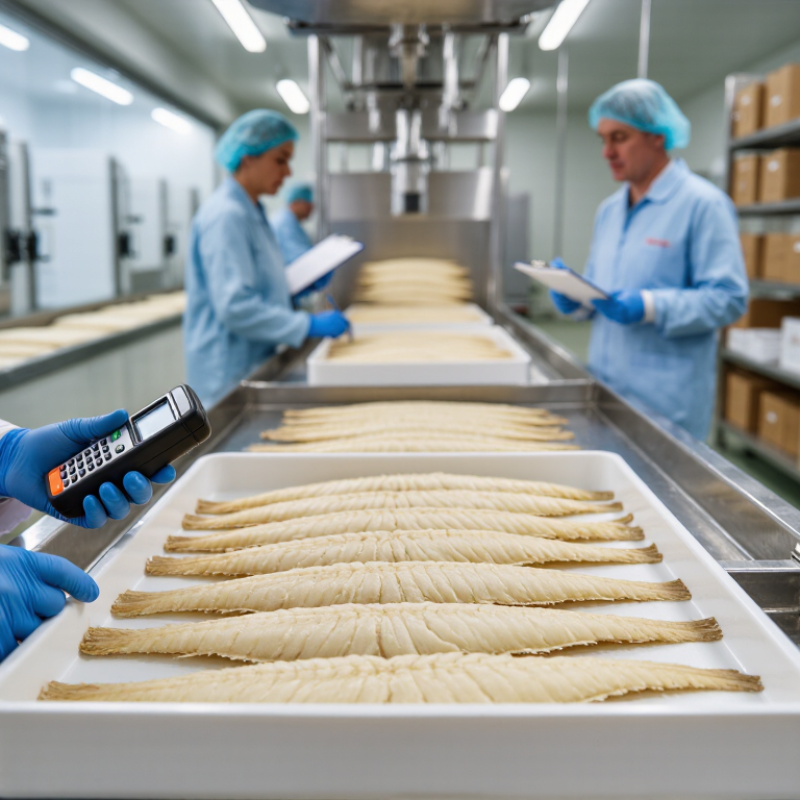
Freeze-dried cod is fish flesh preserved through freezing and low-pressure drying. Water leaves the tissue as vapor, while the lightweight structure remains. Proper processing can protect much of the cod’s protein and natural flavor. It also reduces weight and improves storage efficiency.
A typical serving supplies complete protein, vitamin B12, selenium, and phosphorus. Cod is generally lean, so its fat content may be lower than that of oily fish. Omega-3 levels exist, but they are usually less concentrated than in salmon or sardines. Nutrition depends on the species, cut, processing temperature, and serving size. Labels matter.
Rehydrated cod can suit soups, emergency meal kits, camping food, and high-protein recipes. Powdered forms work in seasoning blends, pet-food formulations, and seafood snacks. The texture may become firm or slightly uneven after soaking. That is not always a defect. It can reflect drying conditions or insufficient rehydration time. A buyer should check moisture results, microbial testing, allergen controls, origin records, and packaging performance. These details show practical quality, not just attractive specifications.
For food service, warm water can shorten preparation time, but excessive heat may toughen the fish. Clean water is essential. Salted products also require closer sodium review. Freeze-dried cod is convenient, yet it is not a perfect replacement for fresh cod in every dish. I would test a small batch before approving large-volume supply.
2026 Top Freeze Dried Cod Suppliers for Global Buyers
Freeze-dried cod products are gaining attention in global food, outdoor nutrition, and specialty retail markets. Buyers value their light weight, long storage potential, and concentrated seafood flavor. In 2026, reliable suppliers are expected across Northern Europe, North America, and selected Asian processing hubs. Supply patterns still depend on seasonal landings, processing capacity, and export logistics.
Professional buyers should examine more than price. They need clear species identification, harvesting records, moisture limits, packaging performance, and batch testing. A supplier should explain how quickly cod moves from processing to freeze-drying. Product texture matters too. Some samples rehydrate evenly, while others remain hard in the center. That difference can affect customer reviews and repeat orders.
Traceability is becoming a practical requirement, not just a marketing phrase. Importers should request documented quality systems, allergen controls, and transport procedures. Temperature abuse may not destroy a dry product immediately, but it can damage packaging and flavor. I would also compare three production batches before signing a large contract. One sample proves little. The market looks promising, yet pricing forecasts remain uncertain because energy, fish availability, and freight costs can change quickly. Suppliers may offer impressive specifications, but actual performance deserves independent checking.
| Supplier Region / Cluster | Typical Cod Species | Common Product Forms | Typical Moisture Target | Primary Buyer Applications | Common Bulk Packaging | Storage Guidance | Key Export Documents | Indicative Bulk MOQ |
|---|---|---|---|---|---|---|---|---|
| Northern Europe Atlantic and Arctic fishing corridors | Gadus morhua Atlantic cod | Skinless fillets, diced pieces, flakes, powder, and small consumer-ready portions | Usually 2%–5%, subject to the agreed product specification and water-activity requirement | Premium ready meals, seafood snacks, nutrition products, rehydrated meal ingredients, and retail packs | Moisture-barrier inner bags inside corrugated cartons; nitrogen flushing or vacuum packing may be specified | Cool, dry, dark storage; protect from humidity and oxygen after opening | Commercial invoice, packing list, certificate of origin, health certificate, catch documentation where applicable, and product specification | Approximately 100–500 kg |
| North Atlantic Islands Cold-water fisheries and processing centers | Gadus morhua Atlantic cod | Whole pieces, fillet sections, flakes, granules, and food-service bulk formats | Typically 2%–5%; final limits depend on particle size, packaging, and intended shelf life | Specialty food distribution, expedition foods, emergency meals, instant soups, and high-protein formulations | 5–20 kg barrier bags or 10–25 kg lined cartons for industrial buyers | Store below ordinary ambient warehouse temperatures in low-humidity conditions; avoid temperature cycling | Health certificate, traceability records, catch certificate when required, allergen statement, and batch analysis | Approximately 100–1,000 kg |
| North Pacific Alaska and adjacent Pacific supply routes | Gadus macrocephalus Pacific cod | Fillet pieces, chunks, flakes, powder, and ingredient-grade granules | Commonly 2%–5%; buyers should verify water activity and residual moisture by batch | Instant meals, pet-food ingredients, seafood seasoning, protein blends, and shelf-stable meal kits | Barrier pouches, vacuum-sealed bags, or lined cartons with secondary protective packaging | Dry ambient storage with exposure to heat, light, and moisture minimized | Commercial invoice, packing list, origin statement, health certificate, traceability documents, and laboratory test report | Approximately 250–1,000 kg |
| East Asia Processing and ingredient-conversion hubs | Pacific cod and imported Atlantic cod, depending on the production lot | Flakes, powder, diced pieces, soup ingredients, and customized food-service cuts | Often specified at 3%–5%; particle size and intended rehydration performance should be stated in the contract | Instant noodles, soup bases, snack foods, functional foods, and industrial seafood blends | Aluminum-laminate bags, vacuum packs, or multiwall bags with food-grade liners | Keep sealed in a dry warehouse; reseal opened packs promptly to prevent moisture pickup | Health certificate, certificate of analysis, allergen declaration, origin documentation, packaging declaration, and traceability records | Approximately 500–2,000 kg |
| Western Europe Value-added and private-label manufacturing centers | Atlantic cod, Pacific cod, or mixed-origin cod identified by lot | Retail pouches, single-serve portions, flakes, powder, and blended meal components | Usually 2%–5%, with water activity and microbiological limits agreed before production | Retail private label, outdoor meals, medical nutrition, premium convenience foods, and specialty e-commerce | Retail pouches in cartons; industrial orders may use 5–20 kg lined cases | Ambient, dry, and protected from direct sunlight; follow the validated shelf-life label | Health certificate where required, HACCP documentation, allergen statement, nutrition panel, lot traceability, and certificate of analysis | Approximately 100–500 kg for private label; higher for industrial formats |
| North America Ingredient distributors and specialty seafood processors | Pacific cod and Atlantic cod, with species and harvest area stated on the specification | Ingredient flakes, powder, diced cod, meal components, and consumer-ready pouches | Common commercial target: 2%–5%; confirm water activity, salt level, and microbiological criteria | Emergency preparedness foods, camping meals, protein snacks, pet-food formulations, and food manufacturing | Resealable barrier bags, lined cartons, or pails for powder and small particle formats | Dry ambient storage; use first-in-first-out stock rotation and protect opened packs from humidity | Commercial invoice, packing list, country-of-origin information, preventive-control or HACCP records, allergen statement, and test report | Approximately 100–1,000 kg |
| Oceania and Asia-Pacific Import, repacking, and regional distribution hubs | Imported Atlantic cod or Pacific cod, depending on supplier and approved origin | Small pouches, flakes, powder, soup portions, and ingredient packs for food-service use | Generally 2%–5%; shipping conditions make moisture-barrier performance particularly important | Outdoor food, disaster-relief stocks, instant meals, specialty retail, and food-service distribution | High-barrier pouches inside cartons; desiccant use may be considered where legally and technically appropriate | Maintain a dry supply chain and avoid condensation during refrigerated or humid-weather transport | Health certificate, import permit where applicable, origin certificate, packing list, commercial invoice, and traceability records | Approximately 100–500 kg |
When evaluating freeze-dried cod suppliers, product quality begins with traceable sourcing. Ask where the fish was caught, when it was processed, and how each lot is identified. Reliable suppliers should provide clear records, not vague claims. Review moisture content, water activity, protein data, and microbiological test results. These details reveal whether the cod was properly dried and safely packed.
Request recent certificates for food safety systems, export eligibility, and facility audits. Check whether testing comes from an independent laboratory. Packaging should protect the fish from oxygen, humidity, and light. Ask for photographs of sealed cartons and inner bags. A dependable supplier can explain storage temperatures, shipping conditions, and expected shelf life. Communication matters too. Slow or incomplete answers may signal weak internal controls.
Tips: Order samples from different production lots. Compare texture, aroma, color, and rehydration performance. Check whether batch numbers match the documents. Confirm labeling and import requirements in your destination market. Do not rely only on a polished website. A factory video can look impressive, yet it proves little without records. No checklist is perfect. I would also question unusually low prices, because hidden compromises may appear in drying, testing, or packaging. Reliable partnerships develop through repeated evidence, honest corrections, and consistent deliveries.
International buyers need more than a low quote when selecting freeze-dried cod suppliers. FAO’s State of World Fisheries and Aquaculture 2024 reported 185.4 million tonnes of global fisheries and aquaculture production in 2022. This scale increases supply options, but it also complicates species verification, origin checks, and seasonal planning. Reliable suppliers should identify Atlantic or Pacific cod, fishing area, landing date, and processing location. A clear lot code matters.
Quality needs measurable evidence. Suppliers should provide moisture results, water activity, protein analysis, microbiological testing, and histamine controls where applicable. Freeze-drying protects texture and reduces weight, but it does not replace hygienic handling. Codex Alimentarius hygiene guidance and destination-country import rules should guide the buyer’s audit. Ask for a current certificate of analysis, traceability records, allergen statements, and packaging specifications. Small details count.
UN Comtrade trade data can help buyers compare shipment patterns and declared product values, although customs classifications may group different dried seafood products together. That limitation deserves attention. A supplier showing large export volumes is not automatically the best partner. I would also inspect rehydration performance, bone removal, carton strength, and temperature exposure before approving a contract. Test samples first. Some products look excellent in a sealed pouch yet rehydrate unevenly. Buyers should review corrective-action history and independently verify certificates whenever possible. Reliable supply is built through repeated batch evidence, not attractive brochures.
Import Standards, Quality Checks, and Buyer Considerations
Global buyers should assess freeze dried cod against destination-country rules, not only supplier specifications. The FAO’s State of World Fisheries and Aquaculture 2024 reported 185 million tonnes of aquatic animal production in 2022, with 89% used for human consumption. This scale increases traceability pressure. Request harvest-area details, processing records, lot codes, health certificates, and complete ingredient labels. Codex CXC 52-2003 recommends hygienic controls across fish handling and processing. Buyers should also confirm HACCP-based controls and any required import permits.
Small details matter. Check species identity, colour, odour, bone fragments, moisture, water activity, protein content, and rehydration performance. A crisp piece should regain a clean, firm texture, not become fibrous or sour. Test for pathogens, heavy metals, residues, and rancidity through an accredited laboratory. Codex CXS 190-1995 provides guidance for quick frozen fish, but freeze dried products may need additional contract specifications. Do not copy a frozen-food standard without review.
Packaging deserves equal attention. Use high-barrier materials with reliable seals, oxygen control, and visible lot information. Compare shelf-life data from real-time studies, not optimistic estimates alone. The FAO’s 2024 report also highlights continuing pressure on aquatic food sustainability and resource management. Ask for legal catch documentation and chain-of-custody evidence. Price can mislead. Lower moisture may reduce freight weight, yet poor rehydration lowers practical value. One imperfect lesson remains: laboratory results describe one sample, not every carton. Include retention samples, inspection rights, and clear rejection limits in the purchase agreement.