

Loading...

7 Best Powdered Beets Benefits for Global Buyers

Powdered beets are no longer limited to bright smoothies. Global buyers now encounter them in sachets, tubs, sports blends, and ingredient catalogs. Their appeal is practical: a measured scoop stores easily, mixes into liquids, and offers beetroot flavor without peeling or juicing fresh roots. Yet product quality varies. Color, taste, solubility, and nitrate content can differ by crop and processing method.

The Powdered Beets Benefits buyers often consider include naturally occurring nitrates, plant pigments called betalains, and convenient use in everyday recipes. Sports nutrition researcher Professor Andy Jones has studied beetroot juice and dietary nitrate in exercise contexts. A careful paraphrase of the research takeaway is that responses can depend on the person and activity—not every user should expect the same result. This is not a verified verbatim quotation, so it should not be presented as one.

Details matter. A deep-red powder may tint a glass, while a poorly dispersing product can leave grit at the bottom. Buyers should review ingredient lists, serving guidance, testing information, and storage instructions before comparing suppliers. Claims about nutrition or performance deserve scrutiny, too. More evidence is needed for some uses. This guide explores seven potential benefits, practical selection points, and limitations that global buyers should weigh before purchasing powdered beets.
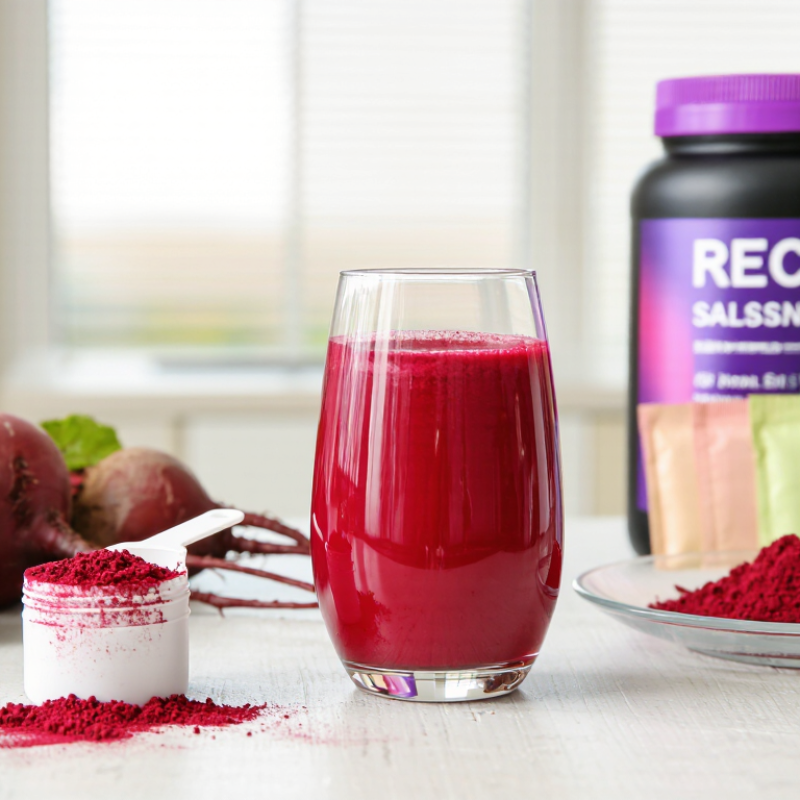
7 Best Powdered Beets Benefits for Global Buyers

Beetroot Powder: Composition, Forms, and Uses

Beetroot powder is made by drying and milling beetroot, but its composition depends on the raw material and process. Whole-root powders may retain fiber, natural sugars, minerals, and pigments called betalains. Juice-based powders can have less fiber and a different concentration of soluble components. Heat and oxygen exposure may also affect color and pigment levels.

Color can vary.

For buyers, a product specification is more useful than a bright sample alone. Check the ingredient list, moisture level, particle size, and whether the powder contains a carrier such as maltodextrin. Ask for batch testing and clear storage guidance; moisture can cause clumping during transport. I would not treat every red powder as equivalent. That matters.

Common forms include fine powders for instant drinks, coarser granules for blends, and standardized extracts intended for specific formulations. In kitchens, beetroot powder can add earthy flavor and a pink-red hue to smoothies, soups, pasta dough, or baked goods. A small amount can tint yogurt; too much may bring a distinctly earthy taste. The shade also shifts with acidity and heating, so trials in the final recipe are practical. It is a food ingredient, not a guaranteed health outcome, and claims should match reliable evidence and local labeling requirements.

Potential Benefits for Blood Flow and Cardiovascular Health

Beetroot powder can provide dietary nitrate, which the body may convert into nitric oxide. This molecule helps blood vessels relax, potentially supporting circulation. Research on beetroot products has found modest blood-pressure changes in some adults, but responses vary. Evidence is stronger for certain juices and tested preparations than for every powder. Processing, storage, serving size, and nitrate content all matter. A scoop is not a standard dose.

For global buyers, check whether a product reports nitrate content or only lists beetroot. Clear serving instructions and independent quality testing offer more useful information than color alone. The powder can be stirred into water or a smoothie, though its earthy taste may be sharp. Small changes matter. Using it alongside a balanced diet and regular activity is more realistic than expecting a quick cardiovascular effect.

People taking blood-pressure medicines or managing kidney-stone concerns should ask a healthcare professional before using concentrated beet products. Beet powder is not a substitute for prescribed treatment or a proven way to prevent heart disease. Research on powders remains uneven, so claims deserve a careful read.

7 Best Powdered Beets Benefits for Global Buyers – Potential Benefits for Blood Flow and Cardiovascular Health

Potential benefit Relevant beet component or pathway What the evidence suggests Buyer and product considerations
Supports nitric oxide production Dietary nitrate can be converted in the body to nitrite and then nitric oxide, a molecule involved in blood-vessel relaxation. This pathway is well established. The nitrate content and resulting effect can vary among beet products and individuals. Request product-specific nitrate results and a defined testing method; “beet powder” alone does not indicate nitrate concentration.
May help support healthy blood pressure Nitrate-derived nitric oxide may promote vasodilation and influence vascular tone. Studies of beetroot products report modest blood-pressure reductions in some groups, but findings vary. Research on beetroot juice cannot automatically be applied to every powder. Avoid promising a treatment effect. Compare serving size, nitrate level, processing method, and evidence for the finished product.
May support exercise efficiency Nitrate may affect the oxygen cost of exercise and muscle function. Some trials report improved exercise efficiency or performance, while results are inconsistent and may depend on the activity, dose, and participant. Check whether performance claims are supported by studies using a comparable beet ingredient, dose, and product format.
May support vascular function Nitric oxide participates in endothelial signaling and regulation of blood-vessel dilation. Some research reports short-term changes in measures of vascular function after beetroot intake. This does not establish prevention or treatment of cardiovascular disease. Use careful, non-disease claims and request documentation relevant to the specific powder and its intended serving.
Provides naturally occurring betalains Beets contain betalain pigments, including betacyanins and betaxanthins, which have antioxidant activity in laboratory testing. Laboratory antioxidant activity does not by itself prove a cardiovascular health benefit in people. Pigment levels can change with processing and storage. For color or pigment specifications, request a defined assay and stability information; do not treat antioxidant testing as proof of clinical outcomes.
Can contribute folate Beets naturally contain folate, a B vitamin involved in normal cell division and other body functions. The amount in a powdered product depends on the beet material, concentration, processing, and serving size. Use a product-specific nutrition analysis rather than assuming fresh-beet nutrient values apply to the powder.
Can contribute potassium Beets naturally provide potassium, an essential mineral involved in normal fluid balance and muscle function. Potassium intake is part of a healthy diet, but the contribution from any powder depends on its measured content and serving size. Request a mineral analysis and consider that people with certain kidney conditions or potassium-related medical restrictions may need professional advice.

Buyer note: Beet powder composition varies with cultivar, growing conditions, concentration, and processing. For responsible product evaluation, request a current certificate of analysis covering relevant nutrients or nitrate content, microbiological quality, heavy metals, and other applicable contaminants. Beet products may also turn urine or stools reddish; this is commonly harmless, but product information should not replace medical advice.

Potential Benefits for Exercise Performance and Stamina

Beet powder contains dietary nitrate, which the body can convert into nitric oxide. This compound helps widen blood vessels and may support blood flow during exercise. Some studies suggest nitrate-rich beet products can modestly improve endurance or reduce the effort a steady workout feels like. The effect varies. Powdered products differ in nitrate content, so a scoop is not a reliable measure of active nitrate. Check product testing and serving information where available.

For a practical trial, some research protocols use beet products a few hours before exercise, but results depend on the person, dose, and activity. A cyclist might notice a small difference on a familiar route; another may notice none. That uncertainty matters. Powder is not a substitute for sleep, training, or fluids, and taking more does not guarantee better stamina. People using blood-pressure medicines or managing a health condition should ask a healthcare professional before use. Keep a simple training log, including timing and how hard the session feels; it can help separate a real pattern from expectation.

Antioxidant, Digestive, and Nutrient-Related Benefits

Beet powder’s red color comes largely from betalain pigments, which are studied for antioxidant activity. Antioxidants help protect cells from oxidative damage, but this does not make beet powder a treatment for disease. Results from laboratory studies do not always translate directly to everyday servings. That distinction matters.

For digestive and nutrient benefits, processing changes the picture. USDA FoodData Central reports that raw beets provide about 2.8 grams of fiber, 109 micrograms of folate, and 325 milligrams of potassium per 100 grams. These figures describe raw beets, not every powder. Drying methods and serving sizes vary. A small spoonful may contribute only modest fiber. The National Academies’ Dietary Reference Intakes set an adult fiber benchmark of 14 grams per 1,000 calories, so beet powder alone is unlikely to close the gap. Not magic, then.

Global buyers should compare product specifications, including fiber, moisture, and nutrient values per serving. Ask for recent laboratory results and clear processing details. Beet powder can add color and useful nutrients to smoothies or soups, but it should complement—not replace—a varied diet.

One limitation remains: published nutrient figures may not match the batch being purchased.

Global Buyer Guide to Quality, Safety, and Sourcing

Global buyers should assess powdered beets by more than color and price. Request the botanical identity, country of origin, harvest period, drying method, and lot-specific certificate of analysis. Check moisture, particle size, microbiological results, pesticide residues, heavy metals, and nitrate levels. A vivid red sample looks promising, but color alone cannot confirm purity or nutrient content. There is no perfect lot; crop and processing differences matter.

Safety records deserve close attention. The World Health Organization’s 2015 global estimates found that contaminated food causes about 600 million illnesses and 420,000 deaths each year. EFSA’s 2017 nitrate assessment set an acceptable daily intake of 3.7 mg per kilogram of body weight per day. This is not a product specification, but it highlights why buyers should request nitrate testing and review results against the rules in each destination market. Confirm traceability, audit records, and change-control procedures. Powder also absorbs moisture easily, so inspect packaging seals and storage conditions before shipment.

Tips: Ask for a retained sample and independent test results for each lot. Compare specifications, not just quotations. Check that shipping documents match the product and batch. And keep one sealed sample for follow-up testing.

7 Best Powdered Beets Benefits for Global Buyers

A nutrient snapshot to support quality, safety, and sourcing decisions.

Raw beetroot provides folate, manganese, potassium, vitamin C, and iron. Values shown are approximate percentages of FDA Daily Values per 100 g of raw beetroot—not powdered beet. Powder nutrient levels vary with beet variety, processing, and serving size; check supplier specifications and product testing.
Reference: USDA FoodData Central, raw beetroot; FDA Daily Values.