7 Tips for Choosing the Best Pressure Washer?
Choosing a Best Pressure Washer is less about chasing maximum power and more about matching the machine to your actual work. A compact electric model may clean patio furniture quietly, while a gas unit can handle long driveways and stubborn moss. The wrong choice, however, can leave marks on soft wood, waste water, or sit unused in your garage.
Pressure-washing educator Jamey Kramar offers a useful reminder: “Choose the machine for the work, not the wish list.” That principle shapes this guide. It encourages practical decisions based on surface type, cleaning frequency, water flow, portability, and maintenance. Numbers matter, but they can mislead when viewed alone. PSI shows pressure. GPM shows water volume. Both affect cleaning speed.
Think about the scene. Are you rinsing muddy steps after a rainy weekend, or stripping old grime from concrete? Will you carry the washer upstairs, or roll it across a wide driveway? These details often matter more than a dramatic specification printed on a box.
This guide presents seven clear tips for comparing models, from electric convenience to gas-powered endurance. It also considers nozzles, detergents, hose length, noise, and long-term reliability. Some recommendations may seem obvious. They are easy to overlook.
A small mistake can be costly.
You might also discover that the most powerful machine is not the best fit. Real-world testing, careful handling, and honest expectations matter. With those points in mind, you can identify a Best Pressure Washer that cleans effectively without creating unnecessary risk or expense.
Define Your Cleaning Needs and Choose the Right Pressure Level
Tip 1: Define the cleaning job before comparing machines. A patio, vehicle, fence, and concrete driveway need different pressure levels. Tip 2: Check PSI and GPM together. PSI provides force, while GPM controls rinsing speed. A high PSI rating alone does not guarantee better cleaning.
Tip 3: Start with the lowest effective pressure. Test a hidden area first, especially on painted wood, soft stone, or old grout. Tip 4: Match the nozzle to the surface. A wider spray is gentler, while a narrow spray can damage finishes quickly. Keep the wand moving. Never hold it close in one spot.
Tip 5: Consider your cleaning frequency and water supply. Occasional household work may need less power than frequent, heavy-duty cleaning. Tip 6: Choose useful accessories, such as an adjustable wand or surface cleaner. They can improve control and reduce uneven marks. Tip 7: Treat safety as part of performance. Wear eye protection and sturdy shoes, and keep the spray away from people, pets, outlets, and fragile seals.
I once used too much pressure on an aged wooden step and raised the grain. It looked clean, but the surface needed repair. That mistake changed my process. Pressure ratings are helpful, yet material condition matters just as much. Read the operating instructions, inspect connections, and pause when the result looks uncertain. Lower pressure often works better with patience and the right detergent.
Compare PSI, GPM, and Cleaning Power for Different Tasks
7 Tips for Choosing the Best Pressure Washer?
PSI measures impact, while GPM measures rinsing volume. Cleaning power is often estimated as PSI multiplied by GPM. A 2,000-PSI washer delivering 2 GPM produces 4,000 cleaning units. That figure helps compare machines, but it is not a complete performance test. Nozzle design, water temperature, and operator distance also matter. Numbers can mislead.
Match pressure to the surface. For concrete patios, around 2,000–3,000 PSI and 2–3 GPM can remove embedded dirt efficiently. Painted wood and siding usually need gentler pressure, often near 1,300–2,000 PSI. Start farther away. Test a corner. I once focused too heavily on PSI and ignored GPM; rinsing became slow, especially around textured paving.
Water use deserves attention. EPA WaterSense reports that outdoor household water use exceeds 30% of total consumption, reaching up to 60% in some dry regions. At 2 GPM, a one-hour cleaning session uses about 120 gallons. The U.S. Geological Survey’s 2015 national withdrawal report recorded roughly 39 billion gallons per day for public supply, showing why efficient water use matters at scale. Choose adequate GPM, not the highest available figure. Check the actual delivered flow, because advertised ratings may reflect ideal conditions. A quieter motor, adjustable nozzle, and reliable safety trigger can matter more than a dramatic PSI number.
Select the Best Power Source and Motor Type for Your Work
Tip 1: Match the power source to the workplace. Electric pressure washers suit garages, patios, and enclosed service areas with ventilation. Gas models fit remote sites where outlets are unavailable. Never operate a fuel engine indoors. The U.S. Consumer Product Safety Commission warns that carbon monoxide can build quickly in enclosed spaces.
Tip 2: Choose the motor for duty cycles, not advertised pressure alone. Universal motors are usually lighter and less expensive. They can become noisy and hot during long cleaning sessions. Induction motors are heavier, quieter, and commonly better suited to repeated use. The U.S. Department of Energy’s Motor Systems Tool explains that efficiency depends on load, speed, and maintenance. That detail matters. A larger motor may waste energy when the pump is poorly matched.
Tip 3: Compare usable cleaning power. Multiply PSI by GPM, then check the rating at the nozzle, not only the maximum figure. For example, 2,000 PSI at 2 GPM produces 4,000 cleaning units. Industry market research from Grand View Research estimated the global pressure washer market at about 2.5 billion dollars in 2023. More buyers now expect efficient, task-specific equipment. I still find this easy to misjudge. Higher pressure can damage soft wood, painted surfaces, or aging mortar. Select adjustable pressure, a properly rated extension cord, and ground-fault protection for wet areas. A short test on an unseen surface can prevent an expensive mistake.
7 Tips for Choosing the Best Pressure Washer
Select the Best Power Source and Motor Type for Your Work
How to read this chart: Cordless battery models are convenient and quiet for light cleaning. Corded electric washers offer consistent power for patios, vehicles, and household maintenance. Gas-powered washers with overhead-valve engines generally deliver the highest pressure and water flow for driveways, decks, and heavy-duty work.
The figures show representative specifications commonly found in current consumer and prosumer pressure-washer categories. Actual performance varies by pump design, nozzle, operating pressure, and water supply.
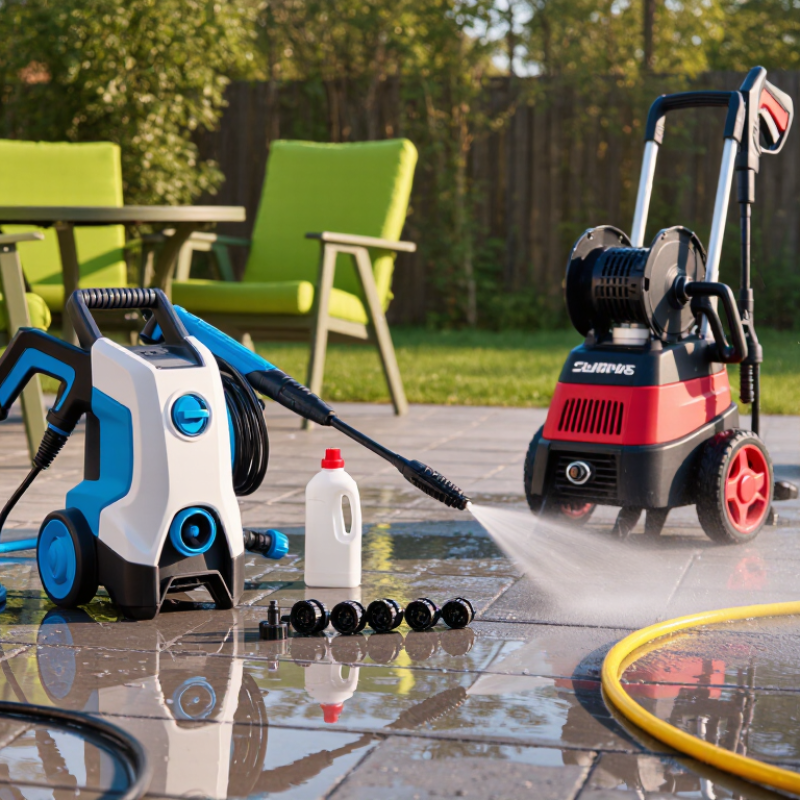
Evaluate Nozzles, Attachments, Hose Length, and Portability
A pressure washer should match the job, not just advertise a high pressure rating. In my own driveway, I learned that nozzle choice often mattered more than maximum power. A narrow nozzle removes stubborn grime from concrete, but it can damage soft wood or painted surfaces. A wider nozzle spreads force safely across larger areas. Check the spray pattern and color coding carefully. Labels can vary between models.
Attachments also shape the cleaning experience. A surface cleaner can reduce streaks on patios, while a rotating brush helps with delicate outdoor furniture. Avoid collecting accessories you rarely use. I once bought a long extension wand that looked useful, but it made control awkward around narrow steps. That mistake still influences my buying decisions.
Hose length deserves practical attention. A longer hose covers more ground without moving the machine, but excessive length can reduce convenience during storage. Look for a flexible, kink-resistant hose with secure connections. Portability matters when the washer must cross gravel, thresholds, or wet grass. Large wheels and a balanced handle usually help more than a compact appearance. Test the handle height if possible. A machine can feel light in a showroom and tiring after twenty minutes. Keep the unit stable, and leave room for water drainage after use.